Choosing A Wrap Company? More Important Than You Know!
Read More
Key PointsOpen for a quick summary
For police officers, firefighters, paramedics and other first responders, being visible on the roadway is more than a matter of appearance. An emergency vehicle may become a temporary barrier, a command post, a source of medical care or simply the most important object approaching drivers need to recognize.
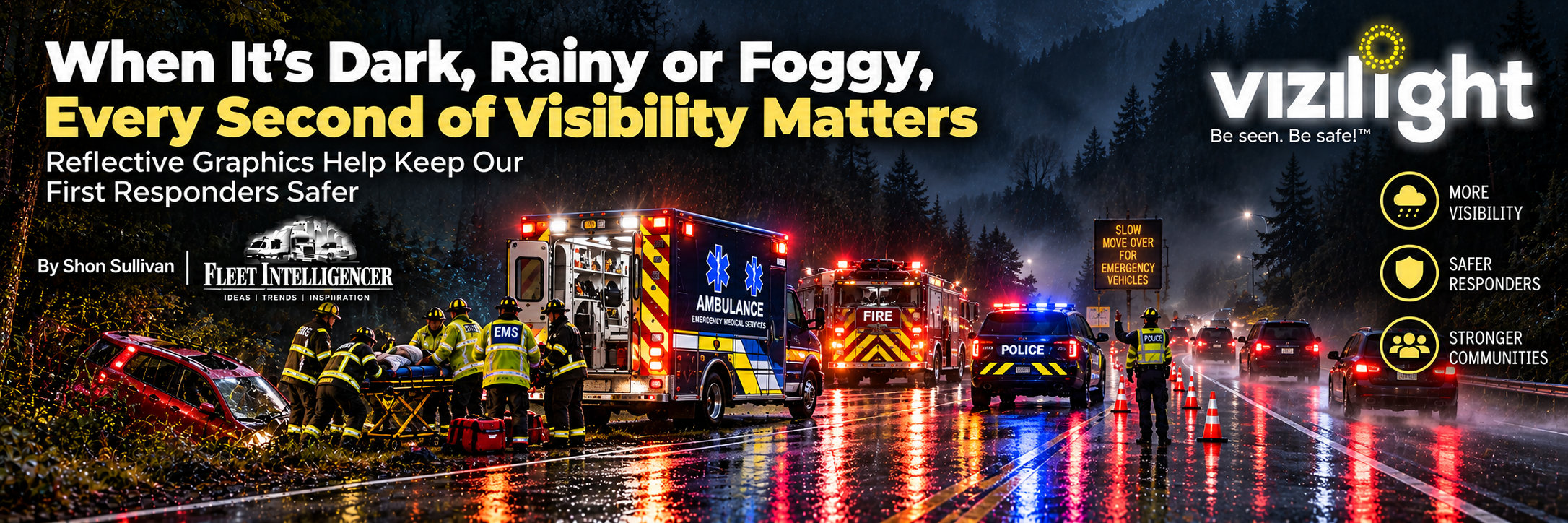
For police officers, firefighters, paramedics and other first responders, being visible on the roadway is more than a matter of appearance. An emergency vehicle may become a temporary barrier, a command post,…
For police officers, firefighters, paramedics and other first responders, being visible on the roadway is more than a matter of appearance. An emergency vehicle may become a temporary barrier, a command post, a source of medical care or simply the most important object approaching drivers need to recognize. When an emergency vehicle is operating after dark or parked alongside moving traffic, its graphics become part of a much larger visibility system designed to help motorists understand what is ahead of them.
That is where reflective vehicle graphics can make an important difference.
Modern reflective wrap materials allow the markings already associated with police cars, fire apparatus and ambulances to take on an entirely different character when illuminated by headlights. During daylight hours, the vehicle can maintain the colors, lettering, striping and agency identity people expect to see. As available light decreases, strategically incorporated reflective material helps those same elements remain visible rather than fading into the darkness.
For emergency vehicles, that transition is especially valuable because their work does not stop when visibility becomes difficult.
Emergency Response Happens in the Dark
A fire engine responding at 2:00 in the afternoon operates in a very different visual environment from the same engine sitting alongside a highway at 2:00 in the morning. Streetlights may be limited, surrounding traffic may be traveling at highway speeds, and drivers approaching an incident may have only seconds to recognize that something unusual is happening ahead.
Emergency lighting is obviously an essential part of that environment, but reflective graphics serve a different purpose. Warning lights generate their own illumination, while retroreflective materials respond to light directed toward them, particularly vehicle headlights, returning that light toward its source and making the marked portions of the vehicle significantly more noticeable.
The two systems can therefore complement one another. Flashing lights communicate urgency and demand attention, while reflective striping, lettering, chevrons and identification markings help define the presence, position and shape of the emergency vehicle itself.
For a driver approaching an emergency scene, that additional visual information can be important. Instead of seeing only a collection of flashing lights in the distance, reflective graphics can help reveal that there is a large fire apparatus occupying a lane, an ambulance positioned on the shoulder or a police vehicle blocking an intersection.
The Pacific Northwest Makes Visibility Even More Important
Here in the Pacific Northwest, low visibility is not limited to nighttime.
Fall and winter bring long periods of darkness, overcast skies and wet roadways. Rain can distort light through a windshield, while standing water and wet pavement create reflections from headlights, streetlights, traffic signals and emergency lighting. Fog can reduce contrast even further, particularly on rural roads, near waterways and in areas where illumination is already limited.
There are also those familiar Northwest afternoons when it may technically still be daylight, yet heavy cloud cover and rain make the roadway feel much darker.
These are precisely the kinds of conditions in which emergency vehicles need to separate themselves visually from their surroundings.
A dark police SUV positioned along a poorly illuminated roadway can quickly blend into the background once the viewer moves beyond its emergency lights. A fire engine parked across traffic lanes may be obvious from one direction but less clearly defined from another. An ambulance working along the shoulder may be surrounded by headlights, taillights, illuminated signs and reflections bouncing from wet pavement.
Reflective graphics give designers another tool for addressing these difficult visual environments.
ViziLight Brings Reflectivity Into the Design
ViziLight is WrapJax's approach to incorporating reflective materials into vehicle graphics rather than treating reflectivity as an afterthought.
For emergency vehicles, that distinction matters.
Reflective material can be incorporated into striping, lettering, department identification, unit numbers, door graphics, rear markings, chevrons and other strategically selected areas. The objective is not simply to cover as much of the vehicle as possible with reflective material. Effective emergency vehicle graphics should consider how the vehicle needs to be recognized from different directions and under dramatically different lighting conditions.
A police vehicle may require clear identification from the side while conducting a traffic stop. A fire apparatus may need substantial rear visibility while crews are working ahead of it. An ambulance may need recognizable markings around multiple sides of the vehicle because its orientation at an emergency scene cannot always be predicted.
ViziLight allows reflective materials to become part of that overall design conversation.
During the day, the graphics can remain clean, professional and consistent with the agency's established identity. At night, headlights can activate the reflective portions of the design, revealing elements that become substantially more prominent in darkness.
Recognition Is Just as Important as Being Seen
There is an important distinction between visibility and recognition.
A driver may see that something is ahead without immediately understanding what it is. Emergency vehicle graphics can help close that gap by combining conspicuity with recognizable patterns, lettering and markings.
A reflective area that identifies POLICE, FIRE, RESCUE or EMS communicates more information than an unidentified bright object. Reflective chevrons can help motorists recognize the rear of a large emergency vehicle, while reflective striping can help define its length and position. Unit numbers and department markings can also remain easier to identify when ordinary printed graphics would otherwise become difficult to see.
That ability to recognize an emergency vehicle quickly is particularly important when motorists are approaching an unexpected incident. Emergency scenes frequently occur where drivers are least prepared to encounter stopped vehicles, personnel or blocked lanes.
The sooner the scene makes visual sense, the more opportunity an approaching driver has to understand what is happening and respond appropriately.
Was this article helpful?