Choosing A Wrap Company? More Important Than You Know!
Read More
Key PointsOpen for a quick summary
The artwork is approved. The installation dates are scheduled. Drivers have been notified, vehicles have been assigned and you've coordinated your schedule to take those vehicles out of service. There's just one more question: Are the vehicles actually ready to be wrapped?
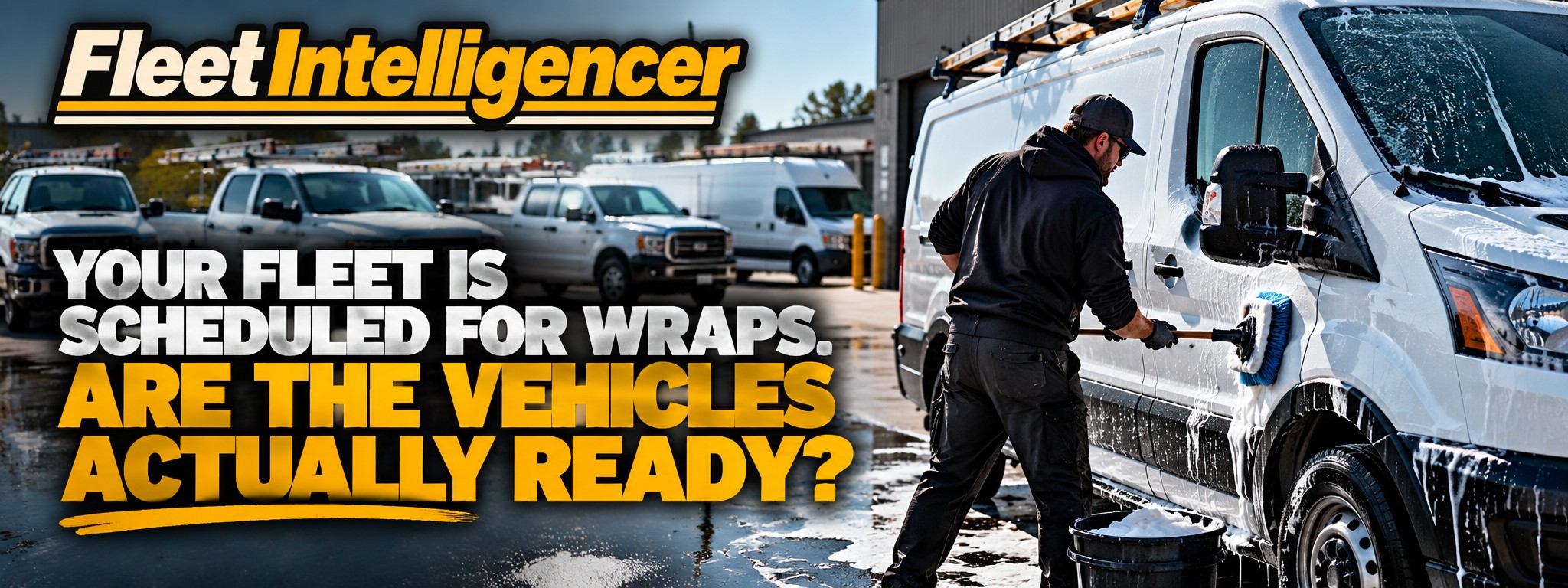
Why Proper Cleaning Before Installation Can Prevent Delays, Additional Costs and Unnecessary Fleet Downtime
The artwork is approved.
The installation dates are scheduled.
Drivers have been notified, vehicles have been assigned and you've coordinated your schedule to take those vehicles out of service.
There's just one more question:
Are the vehicles actually ready to be wrapped?
For commercial fleets, vehicle preparation can be easy to underestimate. A truck or van may look perfectly clean while still having wax, silicone, ceramic products, grease, road film or other contaminants on surfaces where vinyl needs to adhere.
And when you're wrapping multiple vehicles, a small preparation problem can quickly become a much larger operational problem.
One vehicle requiring unexpected preparation is an inconvenience.
Six vehicles requiring it on the morning they're scheduled for installation can disrupt an entire production schedule.
That's why commercial vehicle preparation isn't simply about bringing us clean trucks.
It's about bringing us vehicles that are ready for vinyl.
CLEAN AND WRAP-READY AREN'T THE SAME THING
Most fleet managers already understand the importance of sending reasonably clean vehicles to a wrap facility.
But there's an important distinction between a vehicle that's clean enough to drive and one that's properly prepared for vinyl installation.
A commercial vehicle can come out of a professional detail looking fantastic and actually be less suitable for wrapping than it was before the detail.
Why?
Because many automotive detailing processes finish by applying products specifically designed to make paint slick, glossy and resistant to contamination.
Those characteristics are normally desirable.
They're not necessarily desirable when you're about to cover that surface with adhesive-backed vinyl.
The goal before installation isn't simply:
Make the fleet look clean.
It's:
Make the fleet clean without leaving anything behind that could interfere with adhesion.
THE MOST IMPORTANT RULE: NO WAX
If you're sending vehicles to a detailer, fleet wash or internal maintenance department before installation, make one instruction very clear:
Do not apply wax or paint protection products.
That includes traditional carnauba wax, synthetic waxes, polymer sealants, silicone-containing products, ceramic coatings, spray ceramics and hybrid ceramic products.
This is particularly important for businesses using outside fleet-washing services.
Some wash programs automatically incorporate waxes, drying agents, protectants or other finishing products. Your fleet manager may not even realize they're being applied.
Terms such as wax, ceramic wash, spray ceramic, paint protection, sealant, gloss enhancer or premium protectant should prompt a conversation with your wash provider before vehicles scheduled for wrapping go through that process.
When in doubt, ask exactly what's being applied.
TALK TO YOUR DETAILER OR FLEET-WASH PROVIDER
Communication can prevent a lot of unnecessary work.
If your vehicles are being professionally cleaned before their wrap appointments, don't simply request a detail.
Tell the provider exactly what happens next:
“These vehicles are being prepared for vinyl graphics. Please do not apply wax, ceramic coating, paint sealant, silicone dressing or other protective finishing products to any surfaces that will receive vinyl.”
Professional detailers generally understand why this matters once they know the objective.
You may also want to tell them to pay particular attention to areas where commercial vehicles tend to accumulate contamination:
Lower rocker panels
Wheel openings
Door edges and jambs
Fuel doors
Body seams
Roof edges
Rear doors and liftgates
Areas around handles, hinges and trim
Bumpers and lower bodywork
Recesses and deep body contours
For commercial vehicles, the places that are hardest to clean are often the same places where installers need dependable adhesion.
COMMERCIAL VEHICLES LIVE DIFFERENT LIVES
This is where preparing a fleet vehicle can be very different from preparing a personal vehicle.
A family SUV might accumulate bugs, road grime and an occasional layer of wax.
A work vehicle may spend every day around construction sites, warehouses, industrial facilities, landscaping operations, restaurants, mechanical equipment or heavy traffic.
Depending upon the business, we may encounter:
Grease and lubricants.
Diesel soot.
Hydraulic fluid.
Road tar.
Tree sap.
Jobsite dust.
Concrete or masonry residue.
Adhesive from previous decals.
Heavy road film.
Silicone-based dressings.
Pressure-washing chemicals.
Years of fleet-wash products.
None of these automatically means a vehicle can't be wrapped.
They simply may require more preparation than a conventional wash.
This is also why two apparently identical vans from the same fleet can require very different levels of preparation.
One may have spent three years driving between relatively clean customer locations.
The other may have spent those same three years working on construction sites.
Same fleet. Same vehicle. Completely different surface history.
WHAT ABOUT OLD LETTERING AND GRAPHICS?
Commercial vehicles frequently have another challenge that personal vehicles don't:
Previous branding.
If you're rebranding an existing fleet, changing companies, replacing old graphics or moving from spot graphics to a larger wrap, removing the old vinyl is only part of the process.
Adhesive residue may remain after graphics are removed.
There may also be visible differences in paint condition between areas that were previously covered and areas that were exposed.
In some cases, old graphics have been installed for many years and removal becomes considerably more involved.
If your vehicles currently have graphics, let your wrap provider evaluate them before installation day.
That allows removal, adhesive cleanup and other preparation requirements to become part of the production plan rather than an unexpected problem discovered when the vehicle arrives.
BE CAREFUL WITH TIRE SHINE AND EXTERIOR DRESSINGS
Commercial detailers understandably want a vehicle to look finished when they're done.
That often includes tire shine and treatments for black plastic trim, bumpers and exterior components.
If the vehicle is heading directly to a wrap facility, we'd prefer those products be skipped.
Tire and trim dressings can migrate, overspray or transfer onto surrounding surfaces—particularly around wheel openings, rocker panels and lower body areas.
Those may be exactly the places where graphics need to terminate.
For a vehicle going into wrap production, clean is more important than glossy.
DON'T SEND VEHICLES DIRECTLY FROM THE CAR WASH
Timing matters too.
A freshly washed commercial van can hide a surprising amount of water.
It collects behind:
Door handles.
Mirrors.
Weatherstripping.
Body moldings.
Badges.
Trim.
License plates.
Rear-door hardware.
Roof seams.
Hinges.
That water has an uncanny ability to appear again right when an installer is working nearby.
Whenever possible, wash fleet vehicles far enough ahead of their appointment that they're able to thoroughly drain and dry.
A vehicle that arrives clean and dry is considerably more useful to the installation team than one that arrives dripping wet because somebody ran it through the wash fifteen minutes earlier.
WHAT IF YOUR FLEET HAS CERAMIC COATINGS?
Tell your wrap provider.
Ceramic protection has become increasingly common on both personal and commercial vehicles, and sometimes it's applied without the person responsible for graphics even knowing about it.
A dealership may have applied a protection package when the vehicles were purchased.
A detailer may have included it in a service.
A fleet-washing program may use ceramic-style products periodically.
Even if the coating was applied months or years ago, disclose it.
Depending upon the product and condition, additional preparation may be required before vinyl installation.
And if you're ordering new fleet vehicles that you already intend to wrap, we'd strongly recommend coordinating those plans before accepting dealer-applied paint protection or ceramic packages.
There isn't much benefit in paying to have a coating applied only to pay someone else to remove it before graphics can be installed.
THE FLEET MANAGER MAY NOT KNOW EVERYTHING THAT'S BEEN APPLIED
This is one of the biggest differences between privately owned vehicles and fleets.
The person scheduling the wraps may not be the person driving the vehicle.
They may not be the person washing it.
They may not be the person who purchased it.
And they may not know what happened to that vehicle during the previous three years.
One driver may regularly use a spray wax.
Another may run through an automatic wash every Friday.
A third may have applied a ceramic spray because somebody told them it would make the van easier to clean.
Meanwhile, the fleet manager assumes all three vehicles have been maintained identically.
That's why it can be valuable to communicate directly with drivers before their scheduled installation dates.
Ask them not to apply waxes, ceramic sprays, tire shine or other protective products leading up to the appointment.
And if they know something has previously been applied, encourage them to tell you.
Surface history matters.
PREPARATION IS REALLY ABOUT DOWNTIME
For a personal vehicle owner, additional preparation may mean an inconvenience.
For a business, it can mean something considerably more expensive:
Downtime.
A commercial vehicle that's sitting in a wrap facility isn't making deliveries, visiting customers, carrying technicians or generating revenue.
That's why preparation should ideally be discussed before installation day.
Imagine you've scheduled six vans for graphics and coordinated your employees around those appointments.
If all six arrive properly prepared, production can proceed as planned.
If several arrive with unexpected ceramic coatings, heavy grease, adhesive residue or other contamination, additional work may be required before installation can begin.
The direct cost of preparation is only part of the equation.
The bigger cost may be the disruption created when vehicles aren't returned to service when expected.
Good preparation helps make installation schedules more predictable.
WHEN IN DOUBT, HAVE THE WRAP SHOP HANDLE THE PREP
Sometimes the safest answer is simply acknowledging that you don't know what's on the vehicles.
That's especially common with:
Used commercial vehicles
Recently acquired fleet vehicles
Vehicles transferred from another branch
Older fleet units
Vehicles with previous graphics
Vehicles maintained by multiple drivers
Vehicles purchased from a dealership with protection packages
Fleets using several different wash or detailing vendors
At WrapJax, additional vehicle preparation can be added to a work order when customers are concerned about waxes, sealants, ceramic products or other surface treatments.
Depending upon the vehicle and the level of preparation required, this service generally ranges from $199 to $249 per vehicle.
Not every commercial vehicle needs it.
But when there's uncertainty, identifying the issue before installation is generally far less expensive than addressing an adhesion problem afterward—or unexpectedly extending a vehicle's time out of service.
NORMAL INSTALLATION PREP ISN'T THE SAME AS REMEDIATION
A professional wrap installer will still perform final surface preparation immediately before applying vinyl.
That's normal.
What's different is having to remove substantial amounts of grease, wax, ceramic coating, silicone, adhesive residue or years of accumulated contamination before normal installation preparation can even begin.
The easiest way to think about it is this:
Final installation preparation should be the last step before vinyl goes on—not the first step in discovering everything that needs to come off.
A SIMPLE PRE-WRAP PROTOCOL FOR YOUR FLEET
A few days before installation, communicate with the employees responsible for the scheduled vehicles.
Have the vehicles washed thoroughly, but instruct whoever is washing them not to apply wax, ceramic products, sealants, paint protectants, tire shine or exterior dressings.
Pay particular attention to lower panels, wheel openings, rear doors, body seams, edges and areas where work-related contamination tends to collect.
Remove tools or equipment that could interfere with access to areas receiving graphics, and let your wrap provider know ahead of time about permanent racks, accessories or equipment that may affect installation.
If existing graphics are being removed, determine in advance whether your wrap provider or your company will handle the removal.
Allow enough time after washing for the vehicles to thoroughly dry.
And most importantly, tell your wrap provider about anything unusual:
Previous ceramic coating.
Old graphics.
Adhesive residue.
Repainted panels.
Body repairs.
Heavy grease or industrial contamination.
Dealer-applied protection.
Or simply the fact that you aren't sure what has been applied.
A five-minute conversation before the appointment can prevent hours of unexpected work after the vehicle arrives.
YOUR WRAP SCHEDULE STARTS BEFORE THE VEHICLES ARRIVE
Fleet graphics involve more than printing vinyl and installing it on trucks.
There's artwork approval, production, scheduling, vehicle coordination, installation and getting those vehicles back into service.
Preparation is part of that process.
When the fleet manager, drivers, wash provider, detailer and wrap company all understand what's expected before installation day, everything becomes easier to coordinate.
And that's really the objective.
Not simply cleaner vehicles.
Not shinier vehicles.
Vehicles that arrive ready to wrap—and ready to get back to work.
Was this article helpful?